
The exhibition takes visitors through several thematic sections.
Here we find the History of the Duchy of Cieszyn, a room dedicated to Geology, the "Kitchen and Herbalism" section, "Dialect and Legends", as well as a place dedicated to the Sources of the Vistula River.
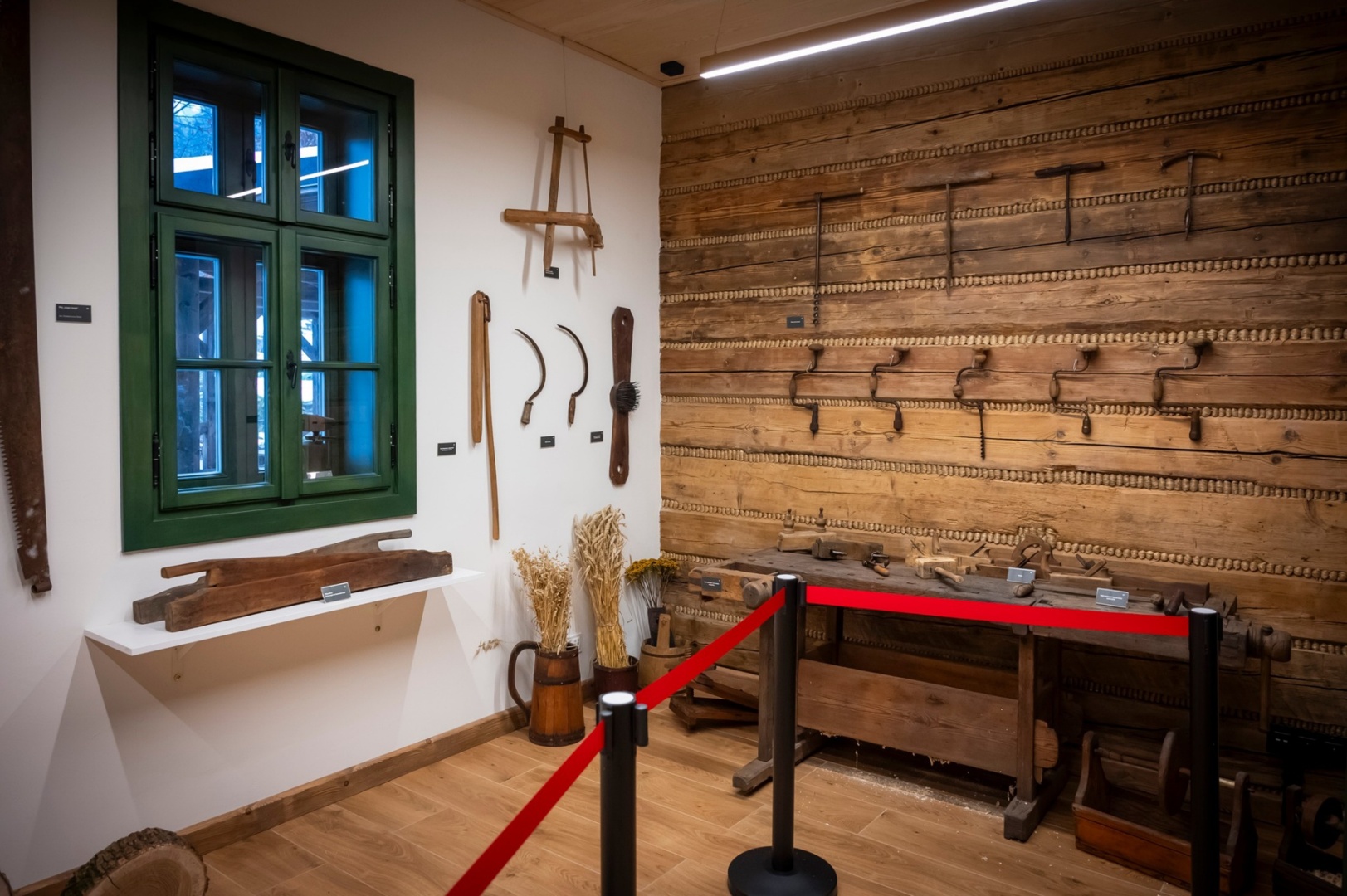
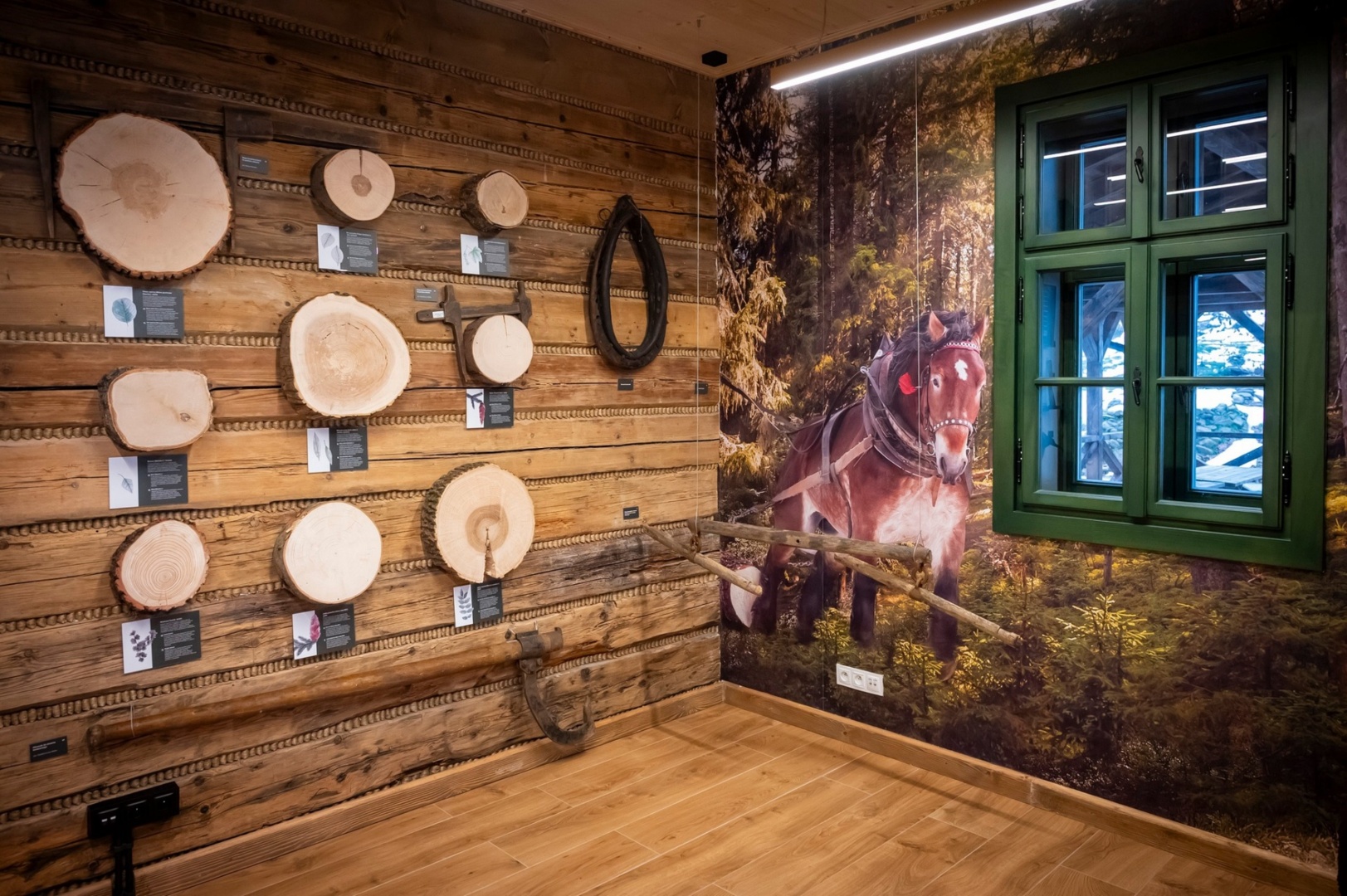
The exhibition of the Beskid Forests, the history of the Wisła economy, a highlander workshop, and rooms dedicated to the tourist development of Wisła as a summer resort are also elements of the Habsburg Economic Settlement.
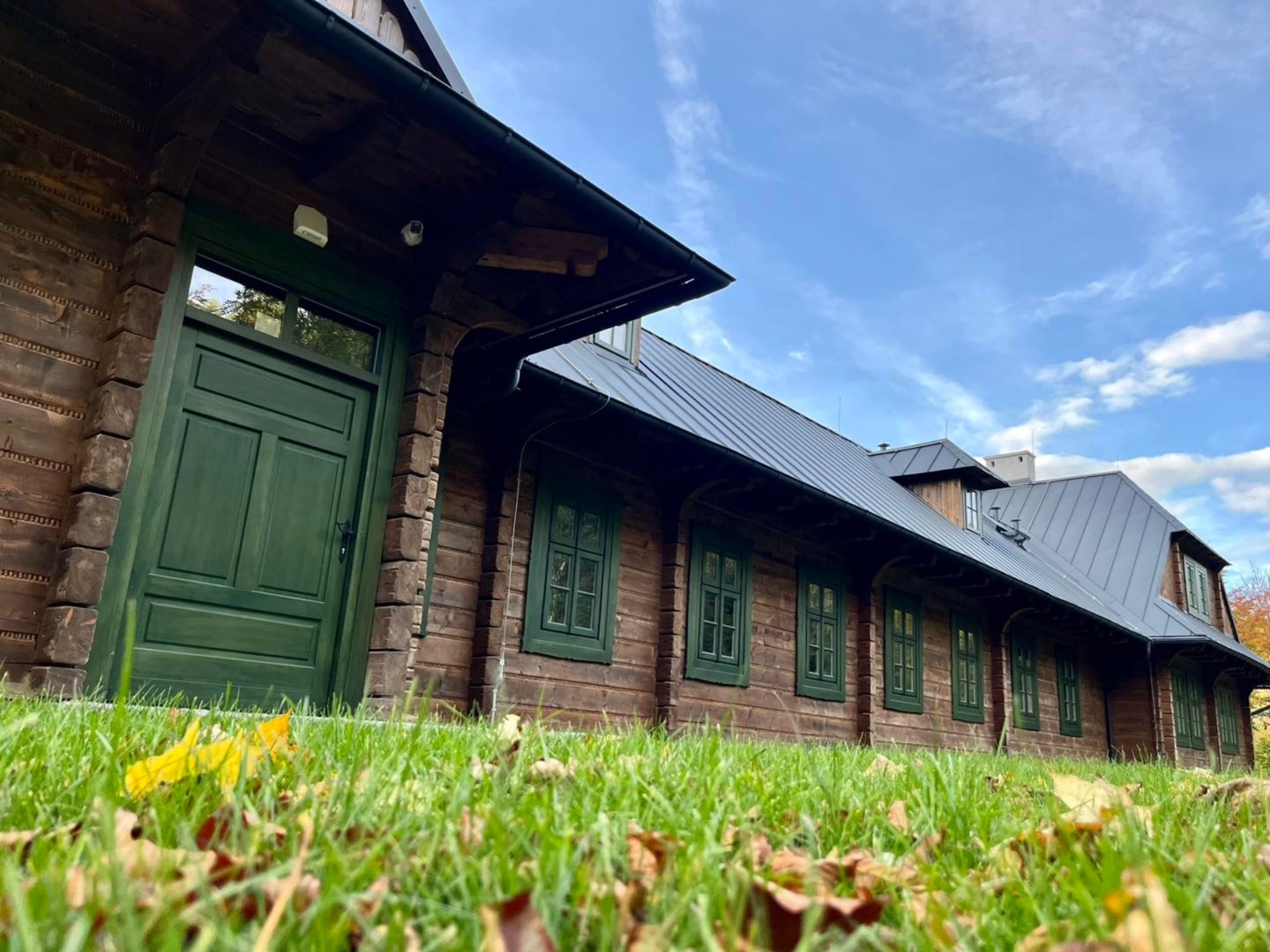
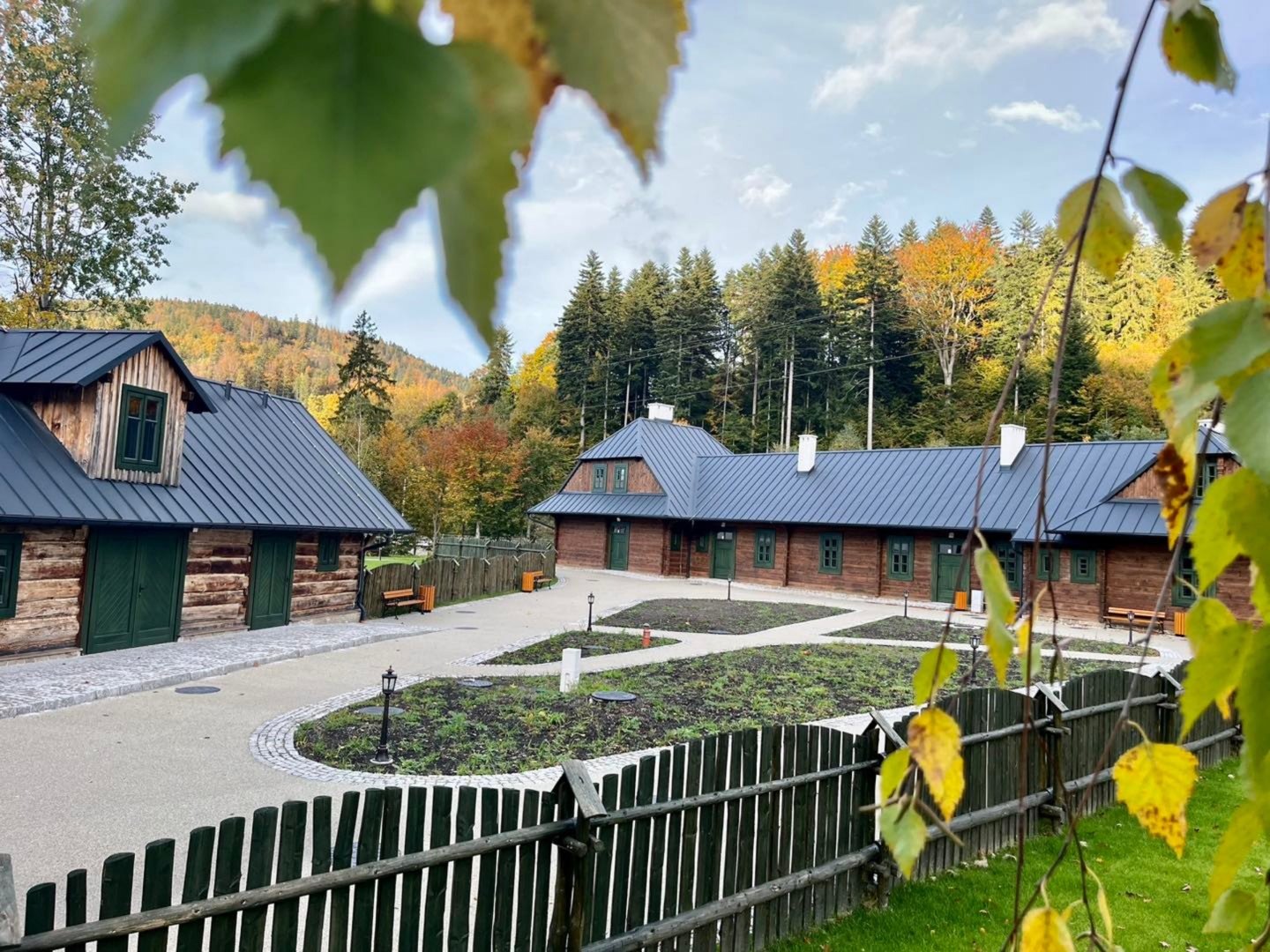
The settlement consists of two buildings. The first (entrance) is an authentic stable (for horses and cows), built in the second half of the 19th century on Wątrobnym – a hamlet (settlement) located on the slopes of Barania Góra over the valley of Biała Wisełka.
The second building is a replica of the so-called Servants' House from Zadni Groń above Czarna Wisełka, where in 1906 a larch hunting lodge was built for the archducal couple Izabela and Fryderyk Habsburg. Both were avid hunters, and in Wisła they mainly hunted capercaillie.
Since the aristocratic guests accompanying the archducal couple did not fit in the existing foresters' lodges nor in the palace at Przysłop, it was decided to build a new lodge. Next to it, two outbuildings were erected: one for the staff and one economic.
The lodge burned down on the night of December 23 to 24, 1927, during renovation works intended to prepare it for the President of the Republic of Poland, Ignacy Mościcki. A new, brick castle was built for the Head of State, and on the site of the burnt one the so-called lower castle was constructed, for officers and the car fleet. The outbuilding survived, it was housing for workers, and later for the auxiliary staff of the castle.
The servants' house building was dismantled during the castle renovation at the beginning of the 21st century; unfortunately, it was not possible to reassemble it for several years. The surviving fragments were used during the construction of the replica in 2023 and can be seen inside.
The project was carried out as part of the "Cieszyn Silesia – a shared history of wood, iron, and people" project implemented jointly with Trzyniec.
Contact
Other attractions
